Sleep Sound Guides
Best Sounds for Sleep: Rain, Noise and ASMR Compared
The best sounds for sleep are the ones that make your own bedroom feel more comfortable without becoming another thing to manage. There is no universal winner, and no sound category guarantees deeper sleep. Begin with the problem you want to solve: an uneven background, a dislike of silence, or a wish for a gentler transition out of a busy evening. Then compare a small number of textures. A short, thoughtful shortlist is more useful than searching through endless recommendations after lights out.

At a glance
- Choose a steady backdrop, a changing natural rhythm or a close-up texture according to your preference.
- A sound that is interesting in a preview may be distracting at bedtime.
- Shortlist one or two sounds, keep them quiet, and include silence in the comparison.
In this article
Start with the kind of listening you prefer
Think about whether you want a sound to disappear into the room or offer something pleasant to notice. Continuous noise and dense rain may suit the first preference. Waves, crackling wood, and detailed ASMR may suit the second. These are listening possibilities, not rankings of sleep effectiveness.
Also ask whether your room needs added sound at all. If silence feels comfortable and interruptions are rare, you do not need to change it. If a specific noise is the problem, reducing it at the source may be more useful than trying to cover it with louder playback.
| Preference | Start with | Watch for |
|---|---|---|
| A continuous natural backdrop | Steady rain | Thunder, distinct drips and gaps. |
| A slower rise and fall | Ocean waves | Loud surf and quiet spaces between waves. |
| A less scenic sound | White or brown noise | Brightness, low-end rumble and overall volume. |
| Close, detailed sounds | No-talking ASMR | Taps or movements that keep your attention active. |
| Small natural details | Stream or fireplace | Sharp splashes or crackles. |
Rain: for an enveloping natural texture
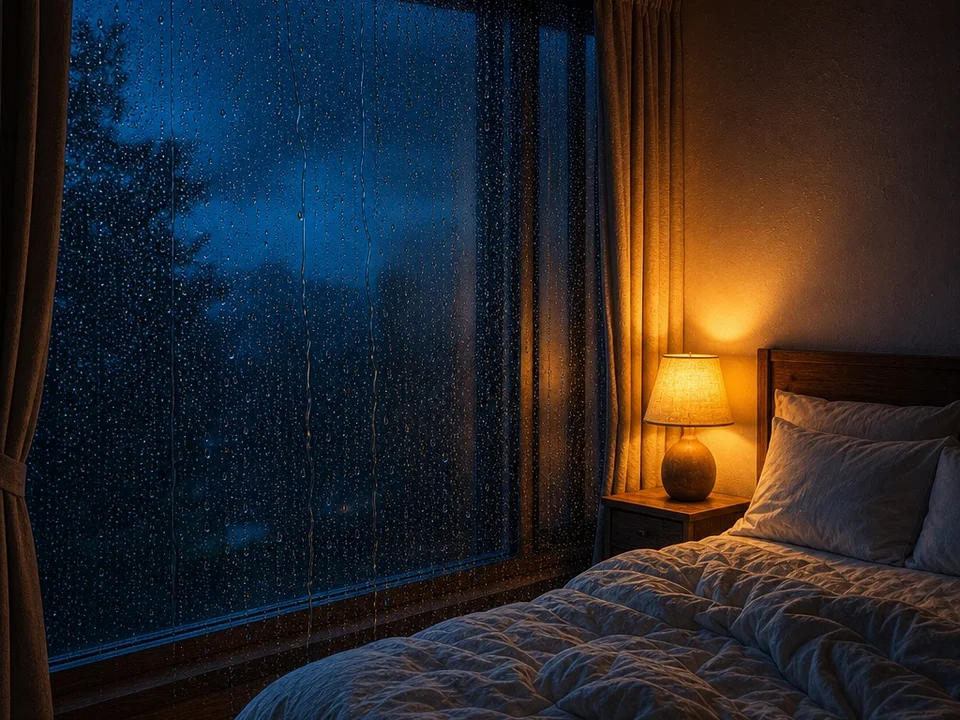
Rain is a useful place to start if you like natural ambience but want relatively continuous coverage. Soft rainfall can feel diffuse; rain on a hard surface may include sharper taps. A dense shower might leave fewer quiet gaps, while a sparse recording lets individual drops stand out.
Choose according to what your attention does, rather than whether the description sounds peaceful. If you keep waiting for the next drip, try a smoother texture. Preview for thunder and unexpected changes before bedtime. There is no requirement to prefer gentle rain over heavy rain if the latter feels more comfortable at a low level.
Ocean: for a changing rise and fall
Ocean waves offer a pattern of approach, breaking water, and retreat. You may enjoy that movement, particularly if an unchanging sound feels flat. The same variation can be distracting if you anticipate each crash or notice outside sounds whenever the surf falls quiet.
Listen to several wave cycles before deciding. Check the loudest crest, the quietest retreat, and any background gulls or voices. A broad coastal recording and close surf on pebbles can feel very different, even though both are labeled ocean sounds. The recording's dynamics matter more than the category name.
White and brown noise: for a less scenic backdrop
White noise tends toward a brighter hiss; brown noise emphasizes a deeper rumble. Try these if recognizable scenes encourage your mind to follow a story, or if you simply prefer a consistent wash. Neither color should be treated as a medical treatment or a guarantee of uninterrupted sleep.
Compare them on the device you will use at night. A phone speaker may make deeper sounds feel thin, while a larger speaker can make them seem heavy. Match comfortable listening levels rather than slider numbers. If both feel artificial or irritating, move on instead of forcing a preference.
Streams and fireplaces: for small, distinct details
Stream sounds can combine a continuous water bed with separate bubbles and splashes. Fireplace recordings can include soft movement and sharper crackles. Choose these when you enjoy a little detail and do not mind a backdrop that occasionally asks to be noticed.
Check whether a particular bubble or pop becomes repetitive. A vivid recording might be lovely while reading and less suitable once you want to stop paying attention. You can use one texture during the evening and quiet at bedtime; a sound does not have to remain on all night to earn a place in your routine.
ASMR: for listeners who enjoy close sound textures
ASMR recordings may feature brushing, tapping, whispering, or other detailed sounds. Some listeners experience pleasant tingling, some enjoy the texture without tingles, and others dislike it. Choose a specific sound you find appealing rather than assuming that the ASMR label will make it relaxing.
If speech holds your attention, start with a no-talking option when available. Ear-cleaning ASMR refers to recorded sound or simulated personal attention, not an actual cleaning treatment. Compare it with broader ambience if close microphone sounds feel intrusive. You do not need to chase a particular sensation to decide whether listening is enjoyable.
Build a shortlist before bedtime
Choose two contrasting options during the day, then try them on separate, ordinary evenings. Keep your speaker placement similar and start at low volume. The goal is a useful personal preference, not a controlled experiment or a score for how well you slept.
- Before bed, notice whether the sound feels comfortable without frequent adjustments.
- In the morning, note any intrusive detail or playback change you remember.
- Keep a quiet evening in the comparison, and avoid checking the clock throughout the night.
Keep the sound in its proper place
NHLBI's sleep guidance emphasizes a regular schedule, quiet time before bed, and a quiet, cool, dark bedroom. It does not identify one sleep sound as best. Let audio support a simpler evening rather than replace those habits or extend your time browsing on a screen.
Keep playback low enough that it feels unobtrusive and essential alerts remain audible. If sound makes your evening worse, turn it off. Persistent sleep problems call for professional advice, not an ever more specific playlist. Your preferred sound is allowed to change with your room, your mood, or the season.
Common questions
What is the best sound for sleeping?
There is no sound that works best for everyone. Rain can offer continuity, waves a rise and fall, and ASMR close detail. Choose the recording you can comfortably stop paying attention to.
Can a sound block all outside noise?
No. Sound masking can make some disturbances less noticeable, but it does not remove them. Do not keep raising playback volume to cover loud traffic or other intrusive noise.